

Delivered by Sebastian Villamil
They’ve won it all!
The list of fairytale endings in sports is short. But the list of athletes that deserve such an ending more than Lionel Messi is even shorter. The 5’7 Argentinian scored 7 goals and assisted his teammates 3 times as he became the first World Cup winner to light up a tournament since Ronaldo Nazario in 2002. Lionel Messi, at 35 years of age, put in his most excellent international display. One that was even more impressive than his run to the final in 2014. The key to Messi’s recent success is a tactical system that no longer made Messi the be-all-end-all offensively, but rather one that allows him to become a lethal weapon that complemented a complete squad. This squad fund success thanks to its ability to rally around Lionel Messi’s “Last Dance”, their tactical flexibility (they used 4 different formations!), a “win at all costs” mentality, and a kick in the butt after losing their opening game to Saudi Arabia, resulting in a new team being built on the fly. However, these attributes alone can’t win a World Cup, La Finnalissima, or the Copa America they won in 2021. At the core of Argentina’s success, in combination with Messi’s brilliance, is a new group of talented players, not all youngsters, that emerged between Argentina’s disastrous campaign in 2018 and their 2021 Copa America victory mixed with veterans who have enjoyed career resurgences despite pushing their mid-thirties. As a result, Argentina, in just 20 competitive games, managed to win 3 International trophies, radically changing Messi’s legacy.
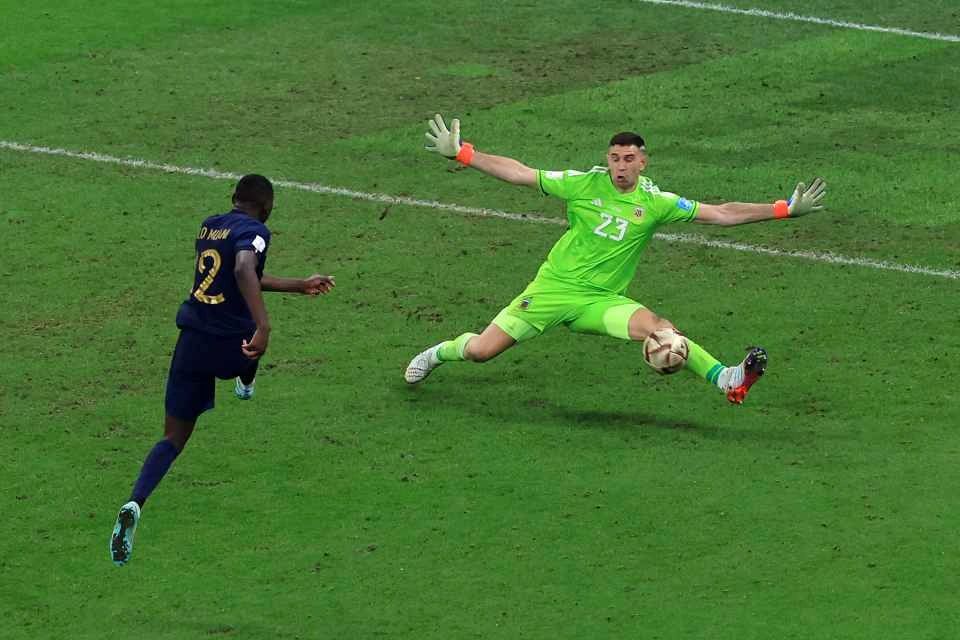
Since 2002, South American powerhouses such as Argentina, Brazil, and Uruguay have fallen short when they faced elite Western European competition. Both times Argentina faced such teams in Qatar, the Netherlands in a heated Quarterfinal tie, and France in the World Cup Final, the game went to a penalty shootout. Upholding Argentina’s status as the best nation in World Cup Shootouts was Emiliano “Dibu” Martinez. The Aston Villa shot-stopper put in performances that would make Sergio Goycochea and Sergio “Chiquito” Romero, both Argentine shootout heroes in their own right, proud. Martinez, unlike many of his teammates, was an unknown in Argentina due to having moved away to England at the age of 17 to pursue his dreams at Arsenal in London. Martinez was a backup at Arsenal for 10 years, never getting called up to a tournament with Argentina, until a cynical shoulder check from Brighton’s striker Neal Maupay, who is ironically half Argentine and half French, injured Arsenal’s number 1 keeper Bernd Leno. Since getting the opportunity, his career has skyrocketed. He impressed in Arsenal’s goal as they knocked out elite competition, such as Manchester City and Christian Pulisic-led Chelsea, on their way to an FA Cup Victory. This earned him a starting gig at Birmingham-based club Aston Villa. He then set a club record with 15 premier league clean sheets, earning him a spot on Argentina’s roster for the 2021 Copa America. “Dibu” endeared himself to Argentine fans with a heroic semi-final performance against Colombia, saving three penalties in a shootout. Each of these saves was combined with trash-talking and dances to put off his opponents. Martinez continued his heroics at the World Cup with a game-winning save against Australia. In the next round, a double save performance in the shootout against the Netherlands was followed by his trademark trash-talk, as he launched tirades against the Dutch technical staff on the field and in interviews. If he had already cemented himself as a national team hero, Martinez’s performance in the final earned him the status of immortality. He sent the game to penalties when his outstretched leg denied French forward Kolo Muani’s point-blank volley in the 122nd minute. This save is being regarded by many as the greatest save of all time. Following that, “Dibu” resorted to his gamesmanship and penalty-saving skills to deny Kingsley Coman and put-off Aurelian Tchocameni, setting up Gonzalo Montiel to win the World Cup. In classic Martinez fashion, he made a rude gesture with the “Golden Glove Award” and mocked Kylian Mbappe during the dressing room celebrations, further cementing his place in the hearts of Argentinians. If not for Neal Maupay injuring Bernd Leno in a seemingly insignificant lockdown Premier League game, Lionel Messi could still find himself mocked as incapable of winning anything with Argentina.
During the Messi-Era, Argentina developed a reputation as a glass cannon. A team blessed with offensive talent but lacking sorely at the back. For instance, in their run to the 2014 World Cup Final, Argentina boasted attacking talents such as Lionel Messi, Sergio “Kun” Aguero, Ezequiel “Pocho” Lavezzi, Gonzalo “Pipita” Higuain, Angel Di Maria, Rodrigo Palacios, and Enzo Perez. Simultaneously, at the back, they relied on aging legends such as Martin Demichelis and Pablo Zabaleta combined with Marcos Rojo and Ezequiel Garay, both lacking elite club resumes. Ironically, the defense statistically outperformed the offense (which can be credited to a fantastic tournament from midfielder Javier Mascherano), but the notion of a glass cannon remained and continued throughout the years. A major contributor to the survival of that reputation was Nicolas “The General” Otamendi. A defender whose highs are high but whose lows are extremely low. Otamendi became infamous for rash challenges and irrational mistakes during his time at Manchester City. However, he has enjoyed a career resurgence at Benfica where he is leading the team to a still-standing unbeaten season in the Portuguese and Champions Leagues. While he shook off some of his shakiness, Otamendi’s brand of hard-nosed, “Brexit football” has remained. This was showcased primarily by the numerous crunching tackles he put in on Brazilians during the 2021 Copa America Final victory. Otamendi had an incredible World Cup in Qatar whose sole blemishes came in the Final. He needlessly conceded a penalty and let Kolo Muani through with a stunningly failed slide tackle during the aforementioned Martinez save. Nevertheless, Otamendi’s resurgent form and his ability to use his national team experience held the Argentine backline together during the campaign, allowing them to defy the glass canon stereotype. Another key facet of Argentina’s dispelling of its glass-cannon reputation was the emergence of two youthful centrebacks. Firstly, the 24-year-old Christian “Cuti” Romero of Tottenham Hotspur started all but one game at the World Cup and was critical in the 2021 Copa America victory. Romero is similar to Otamendi in that he also adopts the hard-tackling, “Brexit” brand of defense. Every weekend Premier League fans see Romero flying into tackles or going to the ground in situations where a conventional defender would simply back off. Romero’s style, although sprinkled with some reckless decision-making, is extremely effective as he often wins the ball while getting into attackers’ heads. The other center-back is the 23-year-old, diminutive Manchester United center-back, Lisandro Martinez. Unlike Romero and Otamendi, Martinez is more of a modern defender who is aggressive yet mostly clean and very good on the ball. However, he is still a warrior. Martinez is willing to put his head where many players are scared to put their feet. While he only started two games, having a third elite center-back gave manager Lionel Scaloni the option to switch to a 3 center-back system. This was deployed to great effect against the Netherlands and was used often to close out games. The four wingbacks- Nahuel Molina of Atletico Madrid, World Cup Final hero Gonzalo Montiel, 2018 veteran Nicolas Tagliafico, and 2018 veteran Marcus “The Egg” Acuna gave Argentina solid defenders also able to contribute to the attack and width of the team. This was showcased primarily by Molina’s driven cross against Poland that found Alexis Mac Allister as well as his darting runs forward which resulted in his goal against the Netherlands and space creation for Julian Alvarez’s first goal against Croatia. Incredibly, all these defenders started multiple games each. This showcased the incredible depth and tactical flexibility Argentina had. This allowed manager Lionel Scaloni to match opponents’ formations like against the Netherlands or close games out such as replacing Di Maria, a forward, with Acuna in the Final. Additionally, these defenders played with grit and determination that can only be characterized as ‘win at all costs.” Otamendi won headers over a 6’6 Harry Souttar, Tagliafico ran the length of the pitch to head away a Croatian longball, and Lisandro Martinez threw himself to block what would have been the goal of the tournament from Australia’s Aziz Bechich. Most Importantly, These emergent and resurgent defenders, despite unfortunate lapses of concentration against the Netherlands and France, helped keep Argentina stable in the wake of their earth-shattering opening game loss to Saudi Arabia.

Accompanied by midfielder Rodrigo De Paul (Left), Romero, Acuna, and Otamendi harass Brazil’s Neymar in the 2021 Copa America Final
In the buildup to the tournament, Argentina’s midfield seemed set in stone. Leandro Paredes, Rodrigo De Paul, and Giovanni Lo Celso, who all emerged between the 2018 World Cup and 2021 Copa America, performed magnificently in Argentina’s Copa America win and in their 36-game unbeaten run. However, an injury to Lo Celso weeks before the tournament demanded a restructuring of the midfield. Scaloni’s first instinct was to put Alejandro ‘Papu” Gomez in to try and emulate Lo Celso’s role as the most attacking midfielder who links the midfield to the forwards and opens up space for Messi. Although Gomez would continue to see action in that role, and others, throughout the tournament, the opening game loss to Saudi Arabia did not help his case to become a starter. Furthermore, the abysmal performance of, Paredes and De Paul put their reliability into question. Fortunately for Scaloni, the final two group games provided him with the perfect midfield. De Paul’s performance recovered as he continued his role as Messi’s “Bodyguard” who took up a lot of Messi’s defensive duties in addition to controlling possession via his defensive solidity, free range of movement, and passing ability. These attributes were most notably seen in the round of 16 match vs. Australia where he pressured Australian Goalkeeper Matt Ryan into losing the ball, resulting in a Julian Alvarez goal, and helped keep possession by offering an outlet pass to the center backs, wingbacks, and fellow midfielders. Brighton’s 23-year-old midfielder Alexis Mac Allister, enjoying a breakout season in the Premier League, proved to be the replacement for Lo Celso that Gomez couldn’t be. In the games against Mexico and Poland, Alexis was the driving force for Argentina who broke the lines and carried the ball forward. His efforts were rewarded with the aforementioned opening goal against Poland, where he ghosted into the box before connecting with a Nahuel Molina cross. Throughout the knockout rounds, Mac Allister continued his excellent performances. It was his penetrative pass that found its way to Lionel Messi, after a fortunate Otamendi touch, for the opening goal against Australia, and his cross that found Angel Di Maria for Argentina’s second goal in the final, finishing off a much-lauded counterattack that cut through the French like butter. The other young midfielder who stepped onto the world stage during the final group games was Enzo Fernandez, a 21-year-old teammate of Otamendi’s at Benfica. Enzo came off the bench for Argentina’s first two games, but a stunning goal against Mexico and a chip assist to Julian Alvarez against Poland cemented him as a starter for Argentina. Enzo played as a deep midfielder for Argentina, picking the ball up from the defense and playing it forward. His calmness on the ball, ability to spot the right pass, fantastic control and brilliant shooting ability drew praise from all over during the tournament, earning him the Silver Ball Award for being the best young player. Fernandez had a standout performance in the final where he ran the most distance, attempted the most passes, locked down the mercurial Antoine Griezmann, and constantly broke the lines. While Fernandez replaced him as a starter, Juventus’ Leandro Paredes proved to be the defensive stalwart Scaloni resorted to when he needed to close out games. He also scored in both of Argentina’s penalty shootouts. Just like the defense, the five midfielders mentioned all started multiple games. This again showcases Argentina’s tactical flexibility as they were able to change their midfield on the fly to lock-down games or to negate opponents. For example, in the semifinal, Scaloni started Fernandez, Paredes, De Paul, and Mac Allister to neutralize Croatia’s world-class midfield trio of Modric, Kovacic, and Brozovic, having just dominated a star-studded Brazil. The Argentine midfield, composed of old and new parts, helped Argentina control possession when needed, create chances, score goals, open up space for Messi, and most importantly, gave Lionel Scaloni the freedom to use multiple systems, always knowing that he would have a reliable backbone.

Fernandez, Mac Allister, and De Paul hug Messi after a victory
Argentina’s forward line starred Lionel Messi, Angel Di Maria, Sergio “Kun” Aguero, and Gonzalo Higuain for almost a decade, running up until Higuain’s international retirement in 2018. These Argentine legends have all had illustrious careers. Messi is Messi. Di Maria was the man of the match in the 2014 Champions League Final for Carlo Ancelotti’s Real Madrid. Higuain set goal-scoring records in Italy and was the last La Liga top goalscorer before ‘La Pichichi” became a game of “hot potato” between Cristiano Ronaldo and Messi. And Aguero is the highest-scoring foreigner in Premier League history, earning him a statue outside the Etihad Stadium depicting his 2012 league-clinching celebration. These players, alongside Messi and others, scored prolifically for Argentina. However, they fell short when needed most. Argentina’s three back-to-back-to-back final losses in the World Cup and two Copa Americas have one thing in common. Argentina failed to score. Real Madrid barred an injured Di Maria from playing in 2014 final. Higuain’s misses are the stuff of legend. Messi’s missed a penalty in 2016. And Aguero coming on for Ezequiel Lavezzi in the 2014 World Cup Final killed Argentina’s momentum, drawing criticism from his own Godfather: Diego Maradona. These poor performances haunted Messi and co. until Angel Di Maria, played through by Rodrigo De Paul, finally broke the scoring duck, lobbing the ball over Brazilian goalkeeper Ederson to secure the 2021 Copa America and shutting up his numerous critics in the Argentine media. Unfortunately for Argentina, Aguero was forced to retire in 2021 due to a heart problem. However, he had already been replaced beforehand. Since his good tournament at the 2019 Copa America, Lautaro Martinez of Inter Milan has been the shoo-in striker for Lionel Scaloni. Despite some high-profile misses, since 2019 he has had the 2nd most goals for Argentina, following only Lionel Messi. Lautaro scored alongside Di Maria and Juventus’ Paolo Dybala as Argentina beat European Champions Italy 3-0 in “La Finalissima”, finishing off a Messi cutback. However, things got off to a rocky start in Qatar. Lautaro had two disallowed goals against Saudi Arabia and was invisible against Mexico. Luckily for Scaloni, in that very game, a solution presented itself. Julian “Spider” Alvarez of Manchester City. Alvarez, whose rise has been overshadowed by his club-teammate Erling Haaland’s incredible form, made a diagonal run that freed up space for Messi to receive a driven pass from Di Maria and score from outside the box. Alvarez combining with ex-River Plate teammate Enzo Fernandez for a goal against Poland all but sealed his spot as Argentina’s new striker alongside Di Maria and Messi. Tragedy struck, however, when Di Maria, fresh off an injury, hurt himself again, risking his availability for the rest of the tournament like in 2014. For the remaining road to the final, Scaloni relied on Alvarez and Messi as his only forwards. From then on, Messi and Alvarez were involved, via goal or assist, in all but one Argentina goal. If Messi was a game-changer in the group stage, he evolved into a game-runner in the knockout phase, and Julian was his right-hand man. Against Australia, Messi dribbled players for fun and broke the lines like the Australians were dummies on a training ground. He collected the ball from Otamendi’s heavy touch to slide in Argentina’s opener. Alvarez added a second after he and Rodrigo De Paul illustrated the aforementioned pressing masterclass to pickpocket Australian goalkeeper Matt Ryan. Messi continued to create chances, putting several chances on a plate for Martinez, who squandered them all. This further secured Alvarez as the starting forward but also heightened the negative media and pressure on Lautaro. Against the Netherlands, Messi was a man on a mission, responding to pre-game banter from Dutch players and coaches with a magnificent performance. Messi played the greatest pass in World Cup History to find wingback Nahuel Molina, taking five Dutch defenders out of the play with a single pass. He then added another goal to his resume by cooly finishing off a penalty kick earned by Marcus Acuna. After a choke job for the ages, and an abandonment of footballing principles from Dutch manager Louis Van Gaal. Argentina found themselves in a heated penalty shootout. Messi, Paredes, and Montiel converted their penalties to go hand in hand with two Emiliano Martinez saves. However, a miss from Enzo Fernandez and two Dutch goals put all the pressure on Lautaro Martinez to win the game. Despite harassment from the Dutch, Lautaro redeemed his transgressions and sent Argentina through, unleashing an irate Lionel Messi on Dutch players and staff. Julian’s silence in the Netherlands game did not last. Following another penalty goal from Messi, Alvarez received a Messi flick around midfield and proceeded to dribble (with a few lucky ricochets) through the Croatian defense and finish with a volley past Croatian goalie Livakovic, becoming the first Argentine since Diego Maradona to score a World Cup goal upon receiving the ball in his own half. The third goal encapsulates the world-conquering strike partnership of Messi and Alvarez. Messi instructed Alvarez to receive and lay off a throw-in down to him. He then flicked the ball past Croatian center-back Josko Gvardiol, running with him down to the edge of Croatia’s box. In an exact replica of Argentina’s opening goal connection between himself and Martinez against Italy, Messi feigned a retreat and cut back towards the byline, skipping past the best defender at the tournament. After shaking off Gvardiol, Messi cut the ball back to find a wide-open Julian Alvarez who slid the ball into the far corner, a fitting final goal for the strike duo. Why the final goal? Because Angel Di Maria, in a beautiful twist of fate, started the final alongside the two of them, hoping to exorcise his demons from his no-show in 2014. Di Maria, who was willing to sacrifice his career to play in the 2014 World Cup Final, played like a man possessed. He cut up Frech players left and right, winning a penalty which Messi converted to put Argentina up 1-0. The second goal was a masterpiece. Messi, under pressure from three French players, flicked the ball to Julian who played a one-touch pass into the space, being run into by Alexis Mac Allister, now vacated by the Messi-pressing French center-back Varane. Mac Allister flashed the ball across the box to a wide-open Di Maria who put Argentina two goals clear of the reigning world champs with a filthy bounce finish. You know what happened next. Messi and Argentina find themselves tied 2-2 in extra time. Gonzalo Montiel lobs a ball forward and Lautaro Martinez touches it down, just as Alvarez did against Croatia, to an oncoming Lionel Messi. French defenders are instantly gravitating towards Messi, unintentionally allowing Lautaro to slide away undetected. Messi plays Enzo Fernandez who slips in Lautaro, gifting him a chance to finally score in a World Cup. He does the next best thing. Martinez’s drilled shot is parried by French Goalkeeper Hugo Lloris straight into Messi, and the rest is history.

Di Maria, Messi, and Alvarez celebrate Messi’s goal against Mexico
Messi was on a different plane in Qatar. However, his teammates were fantastic as well. Despite the starting eleven being built mid-tournament, they all fit in perfectly with the system Scaloni had been developing since Copa America 2021. Emiliano Martinez’s heroics. The rigid, but tactically flexible backline, centered around Otamendi and Romero, managed to shut down the likes of Lewandowski, Kramaric, and Giroud. The midfield led by De Paul, Fernandez, and Mac Allister won balls back, played progressively, and joined the attack. The forward line, starring Alvarez, Di Maria, and Martinez, constantly pressed, made intelligent runs to find space, and was decisive in the box. And Messi. Messi took advantage of finally playing with a tactically sound and complete team. He terrorized teams, taking advantage of the space created for him by his teammates. Messi raised everyone’s levels, through his play and leadership, resulting in World Cup glory. As a result, Messi now has a claim to be the undisputed Greatest Player of All Time. His 13 goals at world cups are good for a joint-fourth-best all-time and most for an Argentinian. His performance in Qatar will be remembered alongside his legendary countrymen– Maradona in 86’ and Kempes in 78’. More importantly, Argentina has won its third World Cup. Come 2025, Argentina will be crowned as the most successful nation at World Cups in the past 50 years, winning 25% of all tournaments since 1975. There were concerns about Scaloni’s experience and Messi’s leadership ability. However, this fantastic team effort, engineered by one and spearheaded by the other, put those doubts to rest.


