
Delivered by Jeremy Stewart
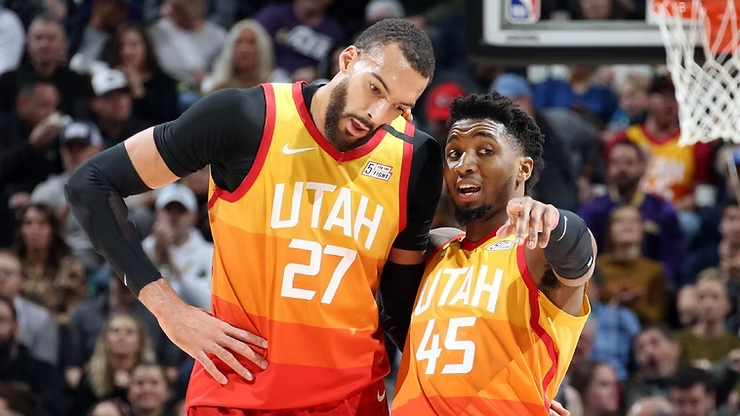
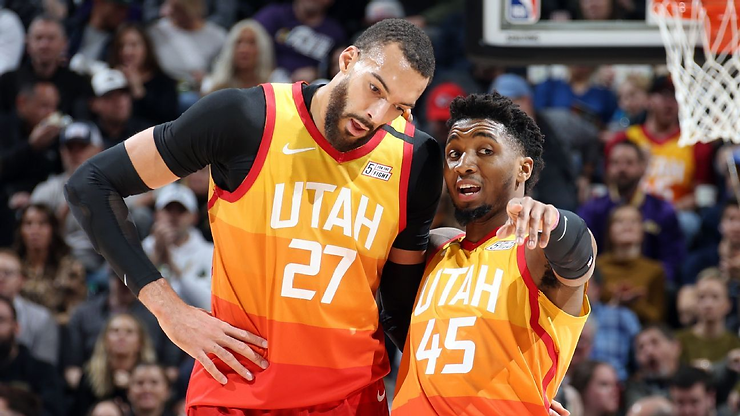
You may not remember, but there were a number of notable moves this past NBA trade cycle. Dejounte Murray got sent to Atlanta, KP was banished to Washington, and, most significantly, the Jazz blew it all up. Utah’s moves may have been the best, as the Big Red Button had never flashed brighter for them. Stock on Mitchell and Gobert was still high and, with all their talent having been shed, they could begin tanking for their next lanky Frenchman (well, maybe not that last part, apparently, after their 10-5 start). While it’s been pretty well proven in this league that you need stars to win, acquiring a big talent like Mitchell, Porzingis, or Gobert comes with a risk. Synergy is almost as important as pure skill, and bringing in new players touting high usage rates will undoubtedly mess with your team’s fit. It just takes time to get used to new teammates, learn new plays, and just get comfortable in a new environment. This is natural, of course, but then another question mark arises — how long do you give a team to figure it out?
To properly answer a question like this, you probably have to break it down into a little more detail. For one, a mid-season move like the Porzingis trade last season needs a little more breathing room than an off-season signing/trade. Players need time to gel with each other before they can really succeed, which is time you don’t have if you’re picking up a new star in February rather than August. An offseason acquisition has the benefit of being able to take that much more time before the season starts to make it work. Despite this, it’s also not quite fair to expect a team to be perfect without actually having tested it out against actual game competition. All the scrimmages against your teammates in the world can’t compare to putting on a new uniform and cutting your teeth against a different squad. And you don’t have to look too much further back to tell that’s true than to revisit LeBron’s “decision” to venture down to South Beach.
You may not remember it, but in Miami’s first season with the Heatles, the team was was concerningly sluggish right out of the gate, starting just 9-8 over their first 17 games. Many fans would (and did) think the experiment was doomed and that the team’s stars couldn’t get out of their own way. Sure, there were some injuries to some fringe guys/role players, but you don’t just get to pair prime LeBron James with prime Dwayne Wade and settle for hovering around .500 on the season. But then, before skidding further, the team put their foot down, calling a “players only” meeting to get themselves set straight. After they couldnt’ get it done versus Dirk’s Maverick’s on the road, Miami holed up in the locker room for nearly and hour before talking to the press. After that, in a way, the rest is history, but things could have ended right there. Let’s say they don’t turn it around and nothing changes, what if Miami disappointingly pulled the 7th seed, stumbled into the playoffs, lost in 6 to Boston or someone else in the first round, and fired Spoelstra? What if they decided they had seen enough prior to that and didn’t give themselves enough time to mesh? Obviously, the team’s contract situations meant they wouldn’t just dump anyone after less than 2 months of basketball, but what if they just sat LeBron with a mysterious “injury” a la Anthony Davis in New Orleans or Kawhi in San Antonio (both guys were legitimately injured, but still)? If nothing else, Spoelstra’s job was definitely at risk, particularly with Pat Riley waiting in the wings to take over head coaching duties.
To conclude this discussion with the Heat’s story, the lesson to be learned is that “figuring it out” is just at a different standard for different teams and different players. This season, the Minnesota Timberwolves have struggled to find the balance between their new core after acquiring Rudy Gobert. They can’t get the most out of their players on offense now that they can’t go 5 out with Gobert clogging the paint. It’s obvious that Minnesota is incredibly talented, though, and even more obvious that they aren’t playing to their potential. These situations get increasingly tricky because, as we’ve learned, it just comes down to the guys wearing the shorts. If Miami’s situation is anything to go by, then the only ones who can decide if they can “figure it out” are the players themselves. Let’s hope the Wolves can come together and finally start hunting as a pack.


