

Delivered by Cullen Avent
Like the ones that came before it, this Summer has seen its fair share of Superhero blockbusters. Though the genre continuously tops the Box Office (likely due to their million-dollar budgets and broad appeal), it has recently sparked ongoing conversations on the internet. Critics and fans alike argue that the sometimes predictable themes, worsening CGI, lack of filmmaking techniques, and frequent releases harm the film industry.
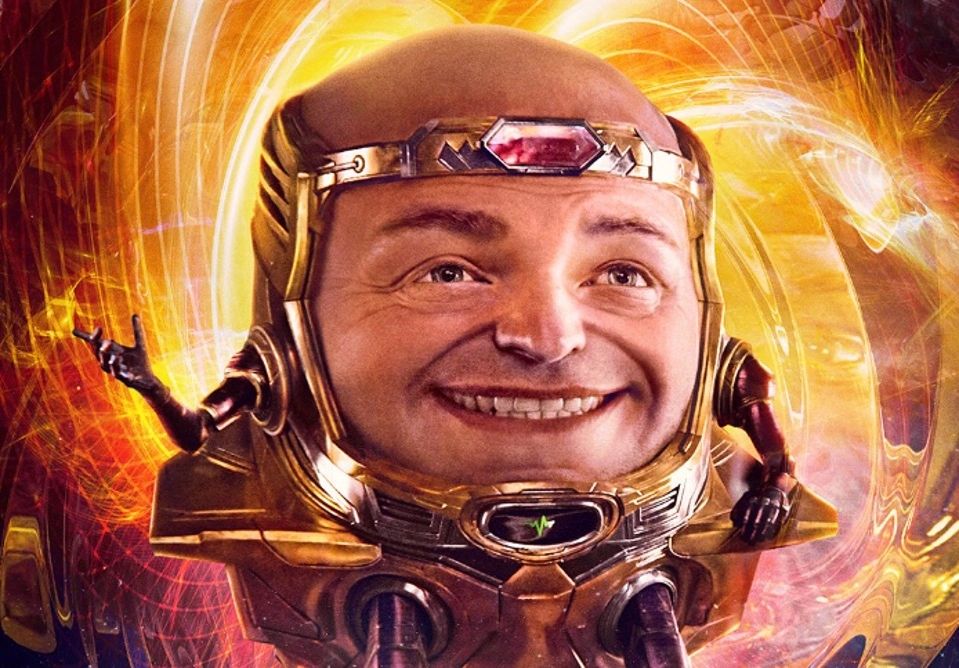
MODOK MARVEL
The two biggest subjects of these debates are none other than Marvel and DC, both of which are the two biggest superhero companies by a landslide. Marvel, after achieving well-deserved success with the Infinity Saga, decided to capitalize on the moment by announcing a doubling of the slate of movies, introducing more characters, taking more risks (some better than others), and expanding into more theme parks. Due to the continuous expansion and release of these properties, many would agree that aside from a select few movies and shows, Marvel has seen a decline in quality, instead sacrificing it for quantity.
Despite pursuing a different path, DC has achieved similar results lately. Initially, the DCEU chose to compete head-to-head with the Marvel Cinematic Universe. Rather than exploring the depths of their own universe and patiently following a comic book storyline, DC opted to present their most iconic characters from the time of the DCEU’s conception (e.g., Man of Steel, Batman vs. Superman, Justice League) as opposed to allowing stories to develop into full-fledged team-ups. On paper, it was a clever strategy, as the introduction to Superman was Man of Steel, which was released in 2013 after Marvel had already solidified itself as the brand to beat when it came to superheroes. By 2012, Marvel’s hit success with Iron Man, Captain America, Thor, and The Avengers pushed superhero culture into the mainstream. DC had no choice BUT to put all of its cards on the table at the time, but they have had ample opportunity to get its feet set and capitalize on its fan base and an insatiable craving for superhero films across the globe. Instead, they made far too many mistakes such as choosing to maintain a dark route, yet still hoping to compete with Marvel–a company with an ageless appeal due to their inclusion of bright colors and jokes.
Though this decision initially served as a handicap in the development of the DCEU (leading to flops for especially dark movies like Suicide Squad and Zack Snyder’s Justice League), DC eventually saw success with The Joker. This gritty, superhero-less film raked in over a billion dollars at the box office. One could say that this led to a fan craving for darker-themed movies.
This led to the adaptation of darker comic books such as Invincible and Peacemaker, both shows that are receiving praise for a darker (and grimly realistic) take on superheroes have accumulated a dedicated fanbase while simultaneously accumulating igniting discussions about the exploration of complex, real-world themes within the superhero drama. The greatest example of this is Amazon’s The Boys, which serves not only as an action-packed superhero show, but also as a surreal comedy and commentary on politics, celebrities, and more.
Unfortunately, the DCEU was never allowed to fully adhere to the violent stories that individual stories like The Batman and The Joker, as they still needed to appeal to children and casual fans. This led to a total reboot of their universe, which leaves the currently slated movies and recent releases in a weird spot. Fans don’t know if they should waste their time watching movies like The Flash and Black Adam, as they’ll have nothing to do with future films. This has resulted in DC losing money, and fans losing respect for the superhero genre, as the constant need for franchises and expansion often causes confusion and sloppily made films.
However, 2023 has seen superhero films reclaim their throne with critically acclaimed movies such as Spider-Man: Across the Spider-Verse. This movie is filled with characterization, fan service, a captivating plot, incredible animation, and significance that transcends the realm of action movies. Additionally, James Gunn’s Guardians of the Galaxy: Vol. 3 is a stunning conclusion to Marvel’s best trilogy. It’s because of these films that we know it’s still possible for superhero films to dominate the box office and win fans over, so why don’t they?
As previously mentioned, the biggest problem lies in the frequency of releases, and Marvel is the biggest offender. Rather than carefully crafting each film and show, and truly considering what caused it to fail or succeed, Marvel often assigns various properties to multiple directors and accepts the results without regard to audience reaction. An example that comes to mind is the reviews of 2022’s Thor: Love and Thunder. Currently sitting at 63% on the Tomatometer with a 77% audience score, fans expressed dissatisfaction that the film was too rushed, too silly, and suffered from poor CGI.
An expected reaction would be to use the critiques to enhance the next Marvel movie. However, 2023’s Ant-Man and the Wasp: Quantumania is currently sitting at 46% on the Tomatometer, paired with an 82% fan score to go with it. Critics similarly complained that the story is repetitive with weak CGI, and tired jokes. With pretty similar scores to Love and Thunder, many fans question why no improvements were made beforehand. The truth is that Marvel doesn’t bother to listen to fans regarding recent movies because the movies simply don’t matter–or at least not to Marvel.
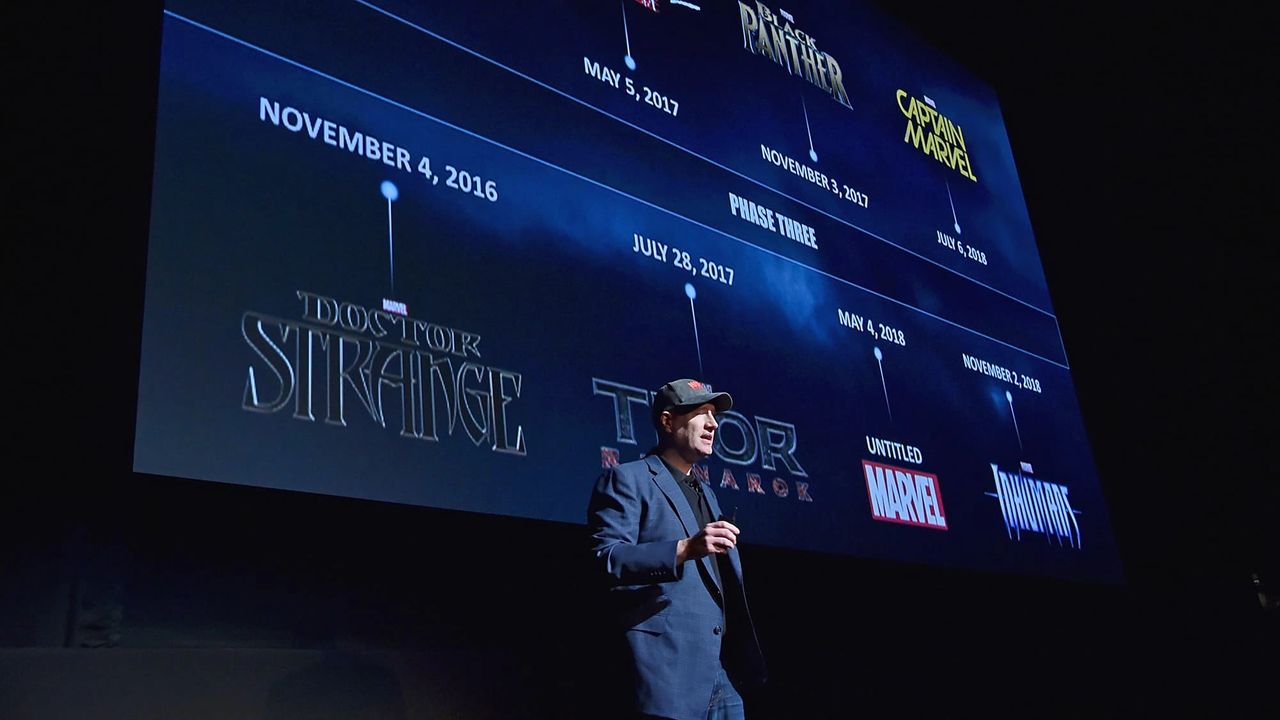
Marvel Studios president Kevin Feige speaks during a fan event at in Los Angeles, Oct. 28, 2014.
Getty Images
The truth is that most Marvel movies hold no significance in the grand scheme of release. When Kevin Fiegie makes his announcement about the future of the MCU, his primary is the pivotal team-up that’ll wrap the phase. Consequently, it’s completely up to the director and cast to truly show care for the movie, and not just use them as rushed, soulless, cash grabs. Unfortunately, only a handful of directors will care about their characters as much as James Gunn for The Guardians, Matt Reaces for Bruce Wayne, or even Zack Snyder for Superman. Until every actor can perform with enough passion as Robert Downey Jr. in Iron-Man, or Shameik Moore in Spider-Man: Across the Spider-Verse, or even Tatiyana Maslany in She-Hulk, superhero films will continue to flop, being used as nothing more than a glorified money laundering scheme.
The good news is that writers and animators are beginning to unionize because although the producers of these films don’t always care about what they’re making and releasing, writers and animators tend to treat each project with a newfound sense of love and care.


